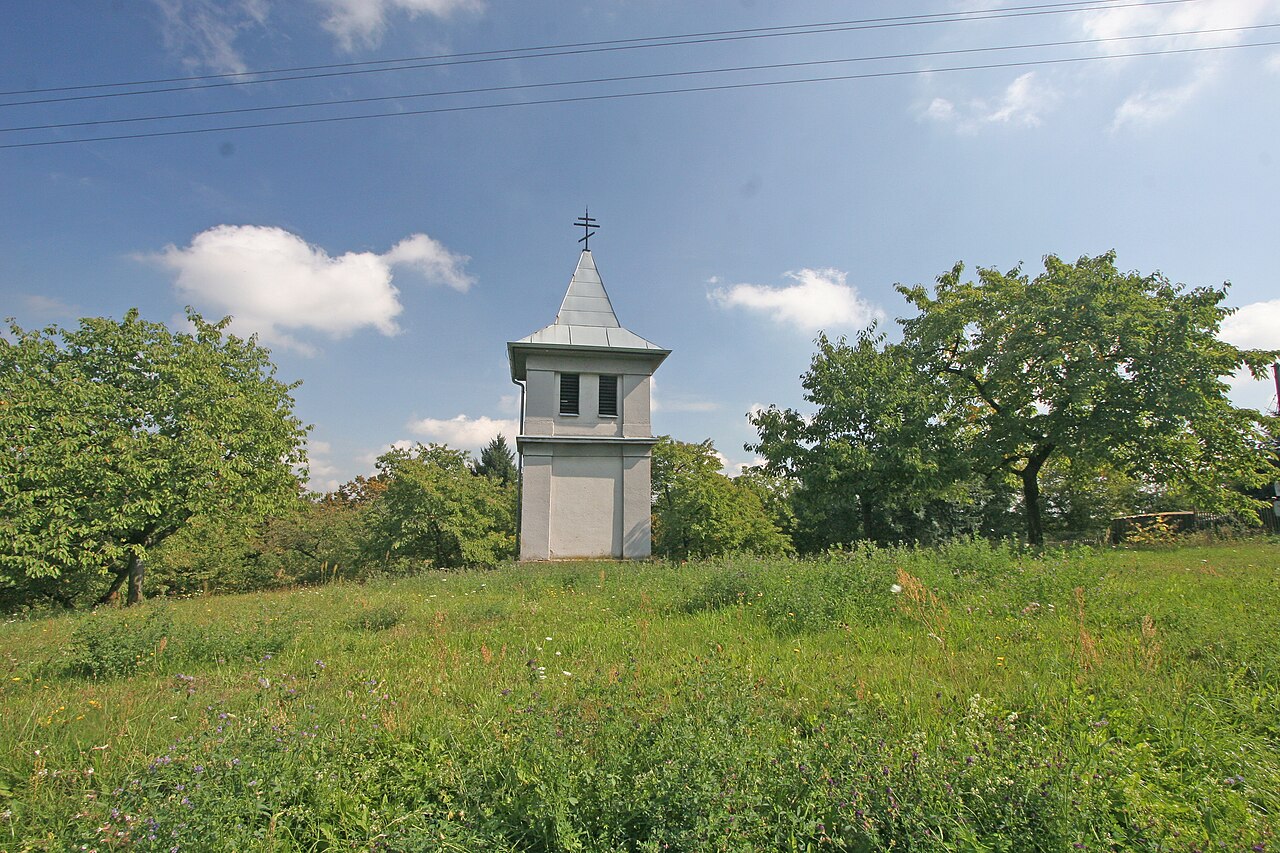
The historic wooden bell tower in his native Kojice, eastern Bohemia.
Photo: Petr1888,
Wikimedia Commons, CC BY-SA 4.0
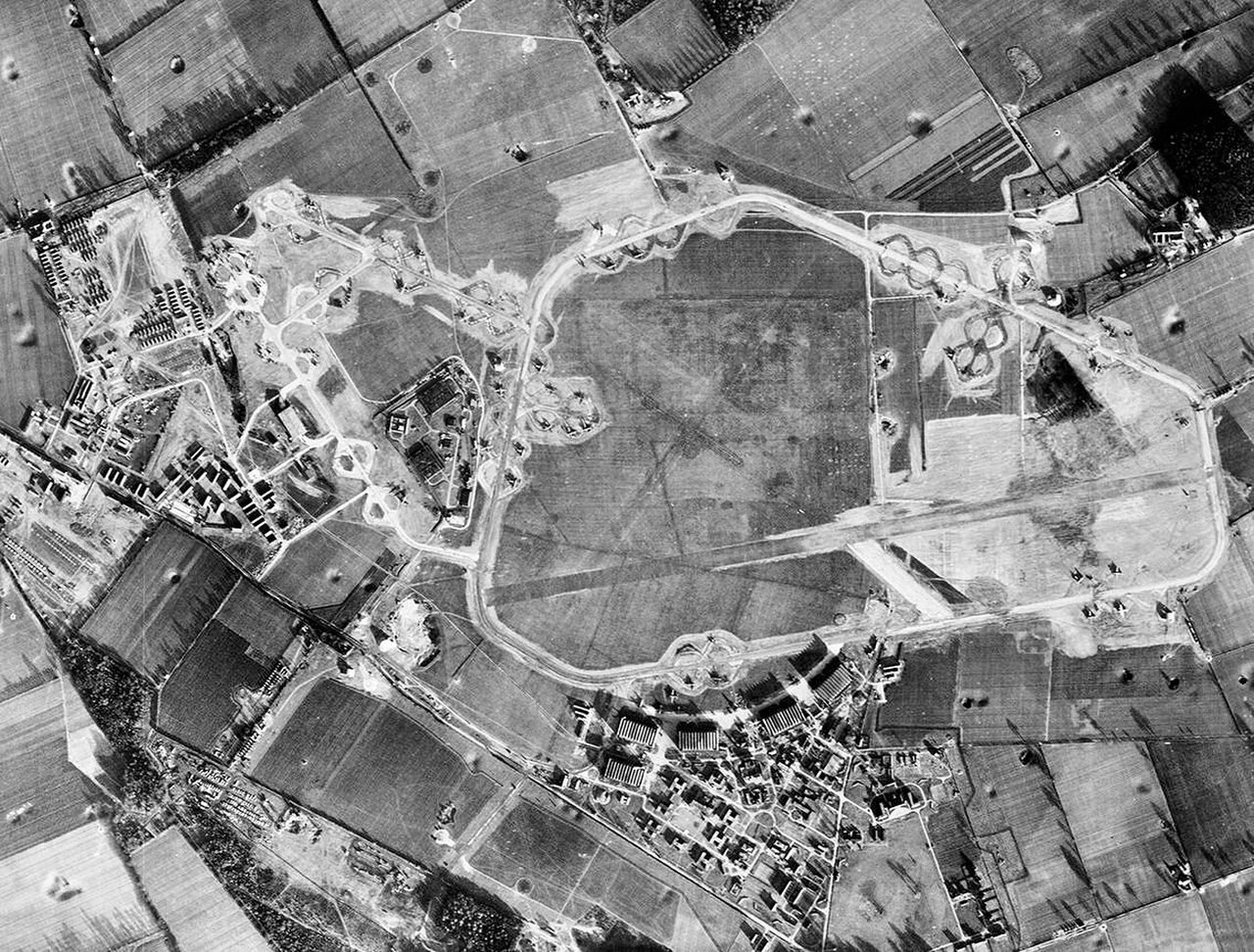
RAF Honington in a 1944 aerial photograph — 311 Squadron's first base,
where Bernat began in 1940.
Photo: USAAF, public domain,
via Wikimedia Commons
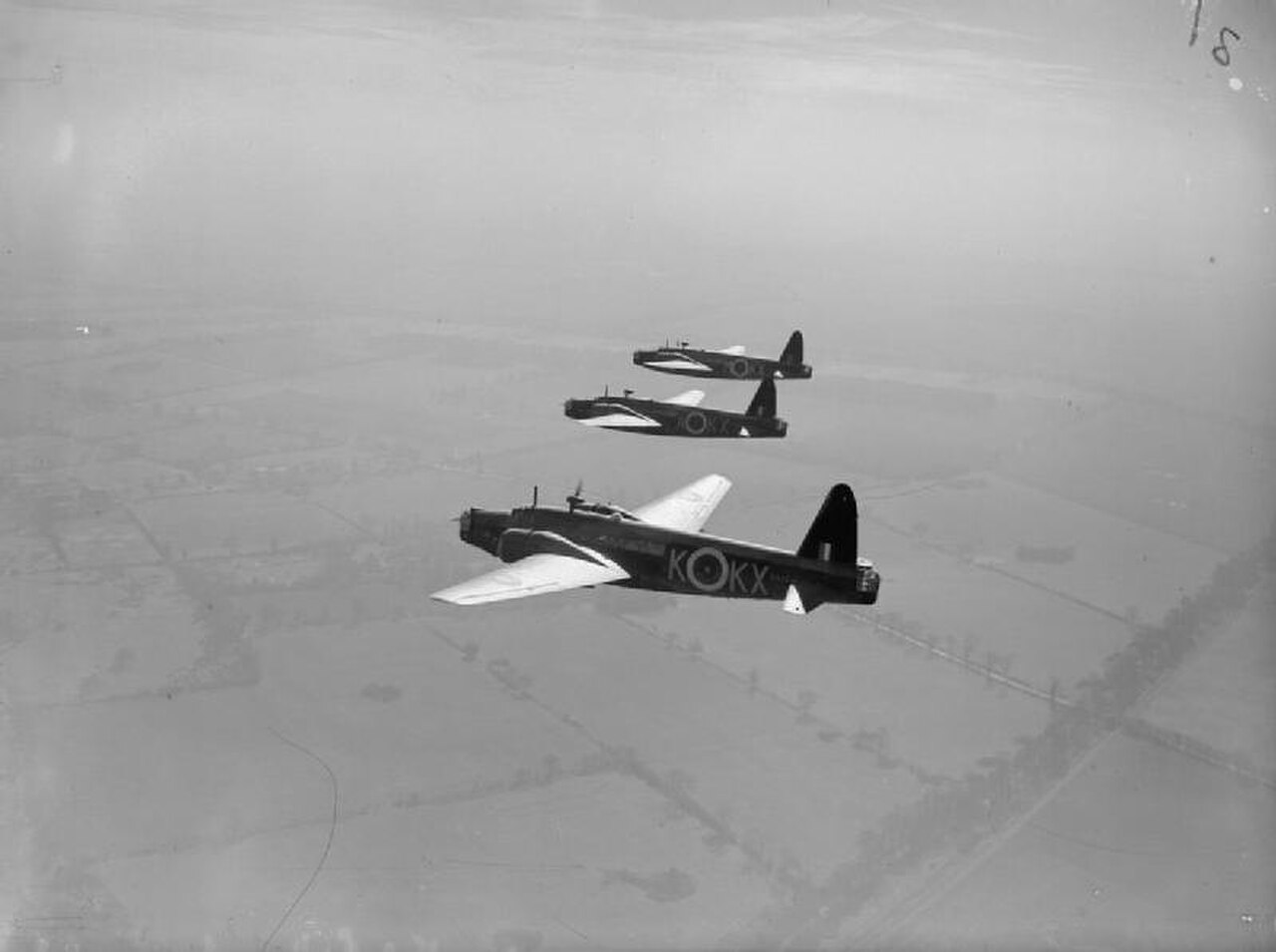
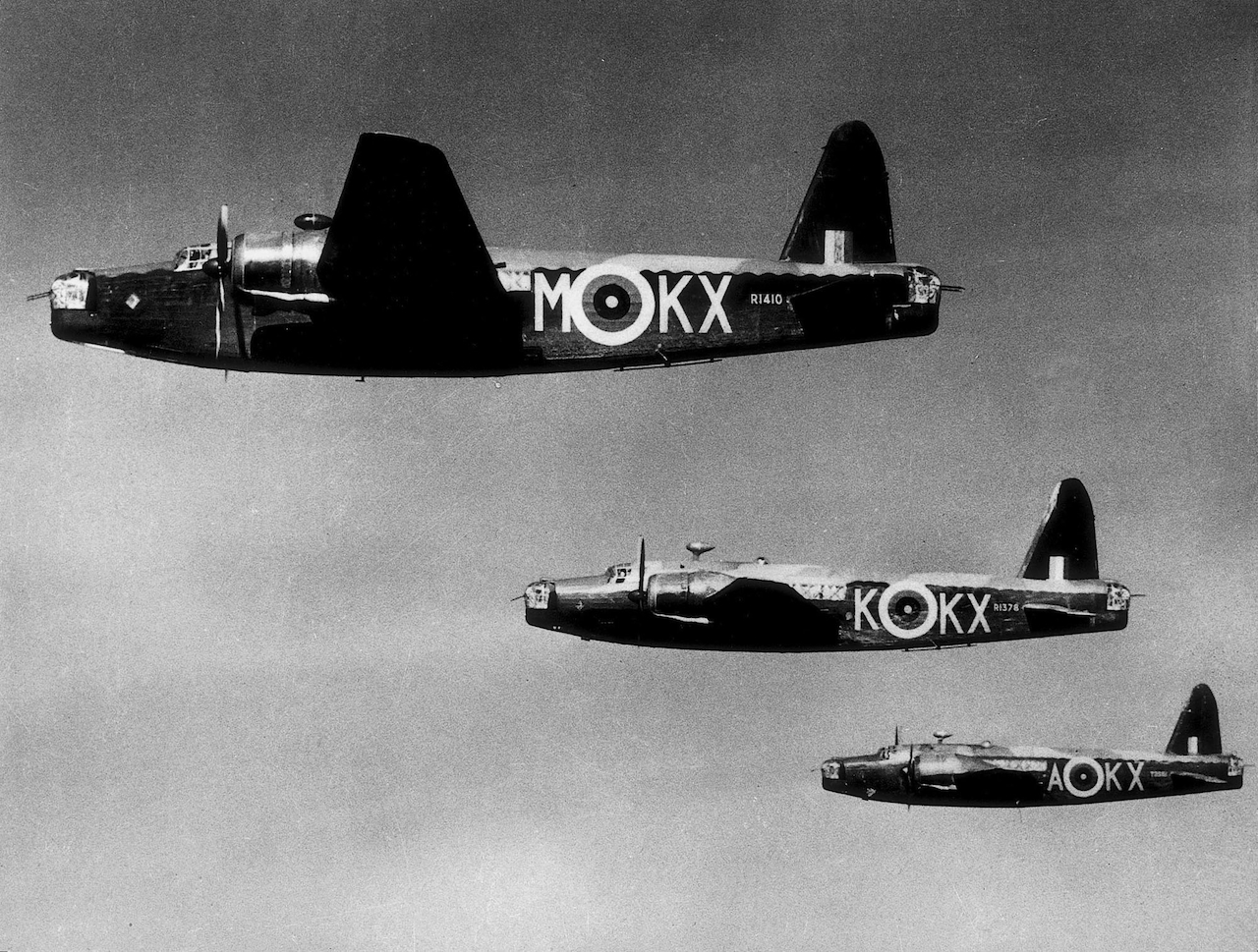
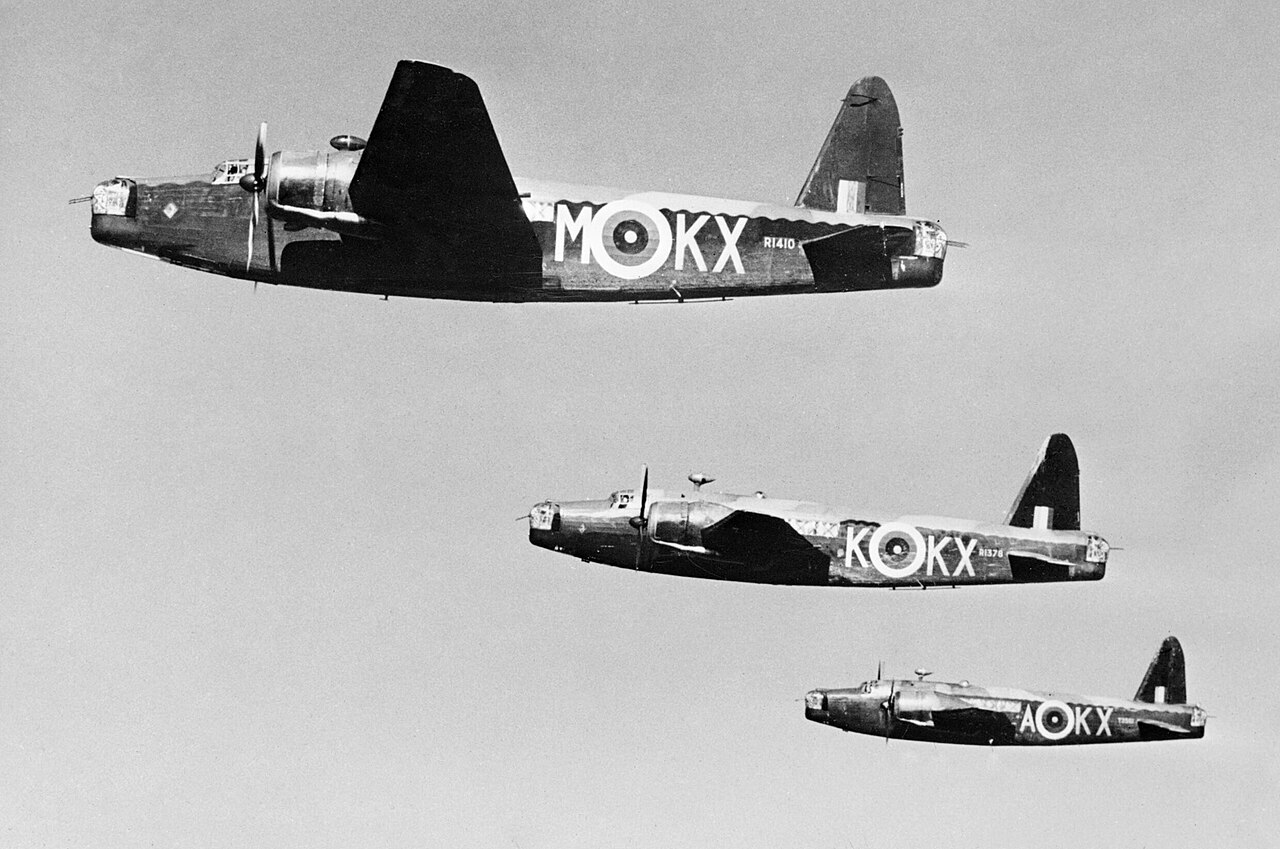
Wellington Mk.Ics of No. 311 Squadron — R1410 (KX-M), R1378 (KX-K) and
T2541 (KX-A) from East Wretham in formation over East Anglia,
March 1941. Bernat was flying with the squadron in these very weeks.
Photo: IWM CH 2265 (B. J. Daventry), public domain,
via Wikimedia Commons
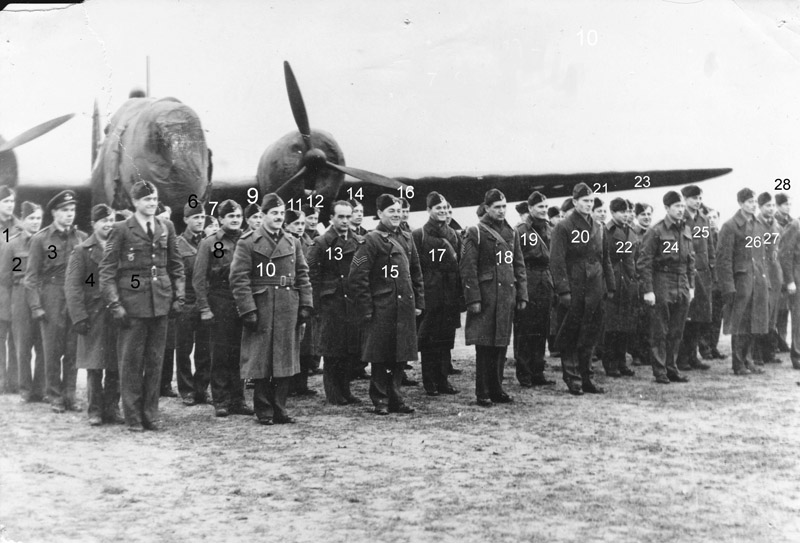
The same trio of 311 Squadron Wellingtons in port echelon — a second
photograph from the same flight.
Photo: IWM CH 2266, public domain,
via Wikimedia Commons
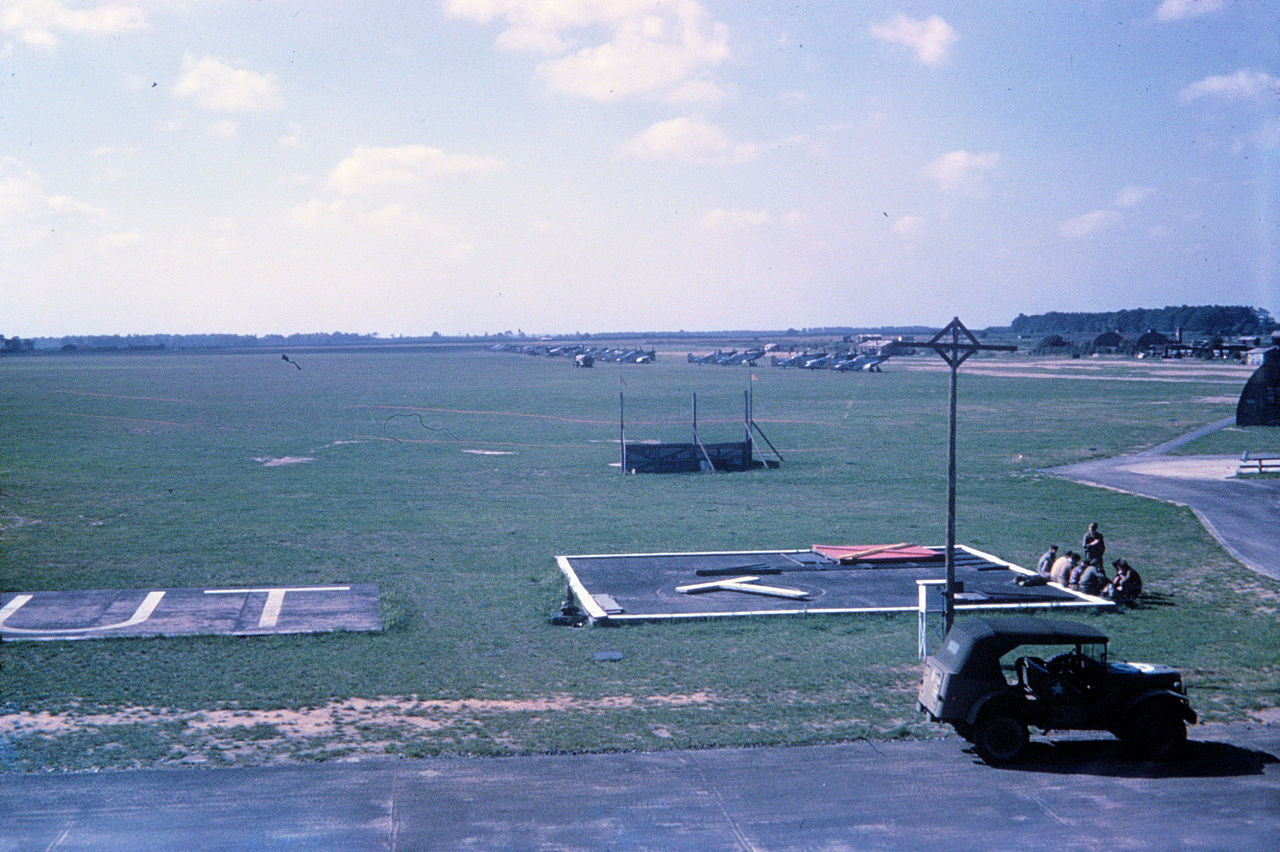
The grass landing field of East Wretham — the modest Norfolk airfield
from which Bernat set out on his raids over Germany.
Photo: IWM / American Air Museum FRE 6140, public
domain, via Wikimedia Commons
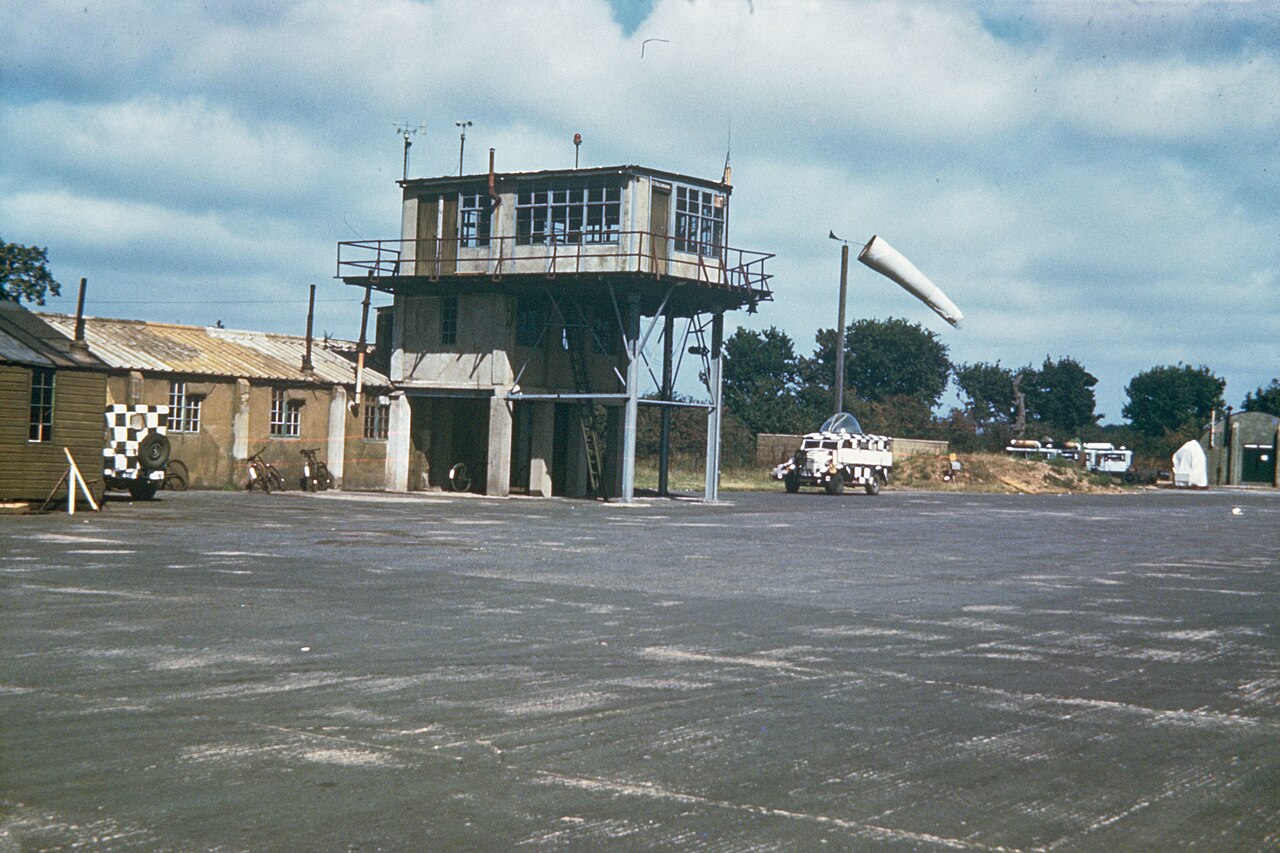
The control tower of East Wretham airfield.
Photo: IWM / American Air Museum FRE 6117, public
domain, via Wikimedia Commons
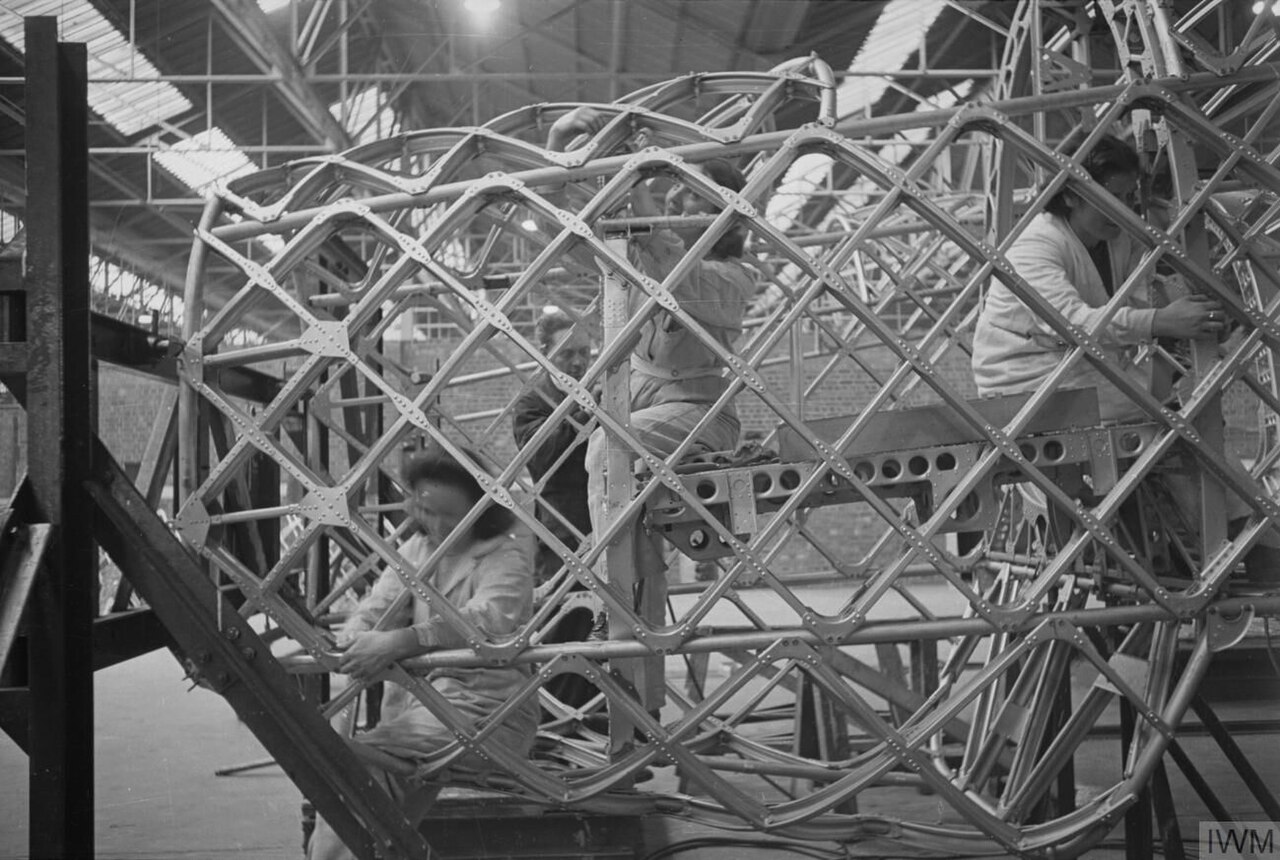
The geodetic airframe of a Wellington at the Vickers-Armstrong works —
Barnes Wallis's famous lattice structure, thanks to which Bernat's
burning R1532 made it home from Münster.
Photo: IWM CH 5974, public domain,
via Wikimedia Commons
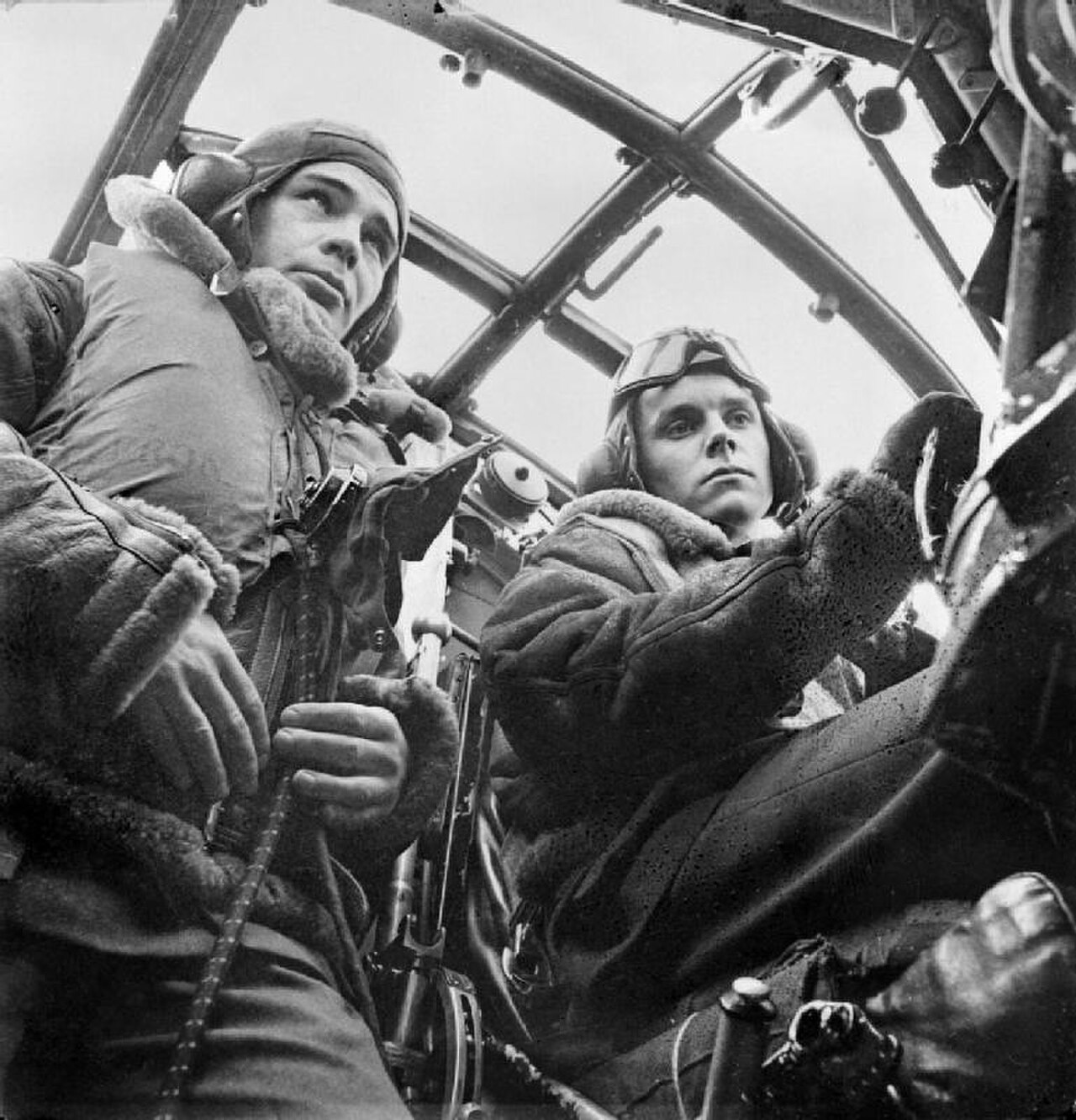
Pilot and second pilot in the cockpit of a Wellington (No. 149
Squadron, 1941) — the workplace where Bernat spent 189 operational
hours.
Photo: Cecil Beaton, IWM D 4737, public domain,
via Wikimedia Commons
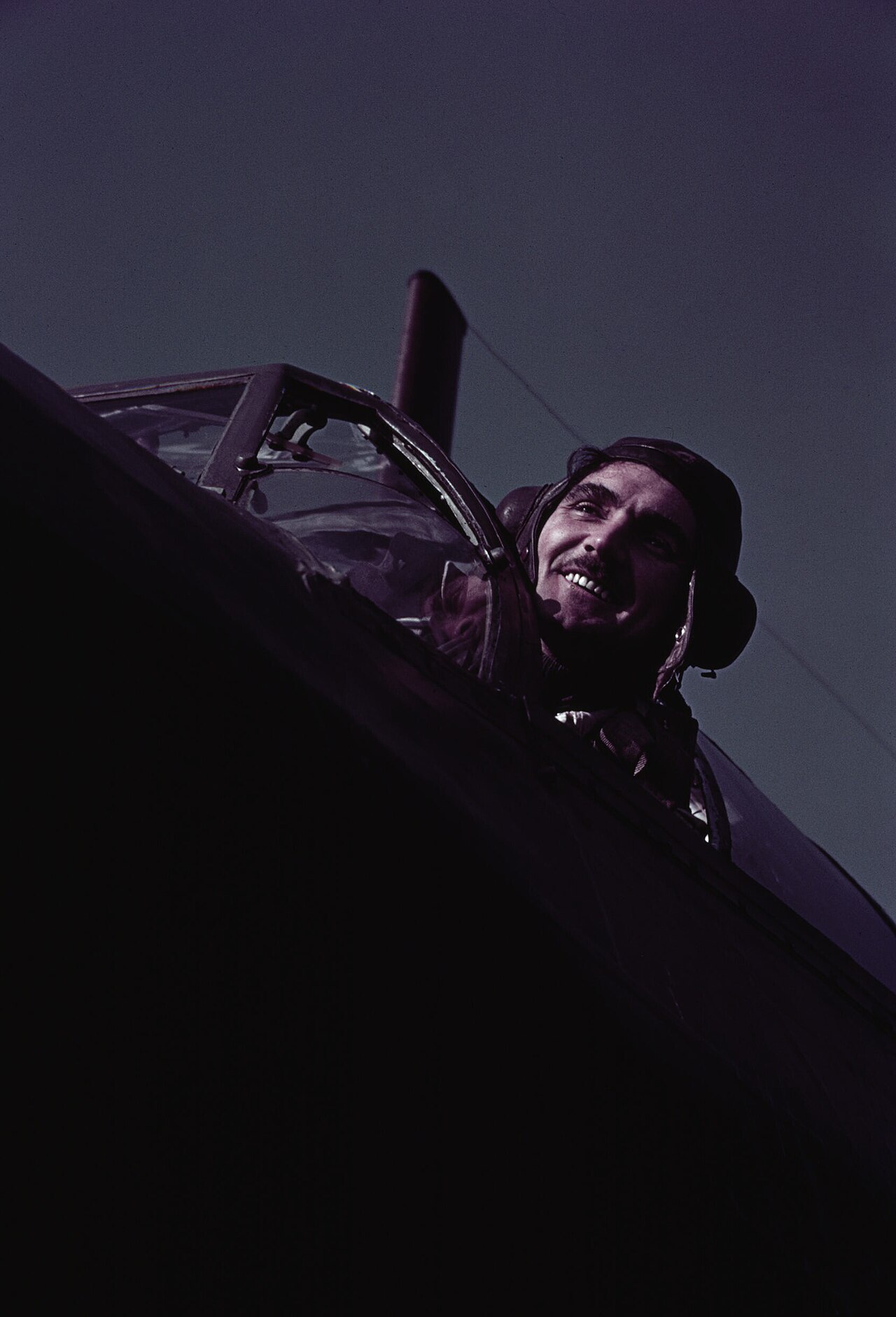
A rare period colour photograph: a Wellington pilot looks out from his
cockpit, 1942.
Photo: IWM TR 107, public domain,
via Wikimedia Commons
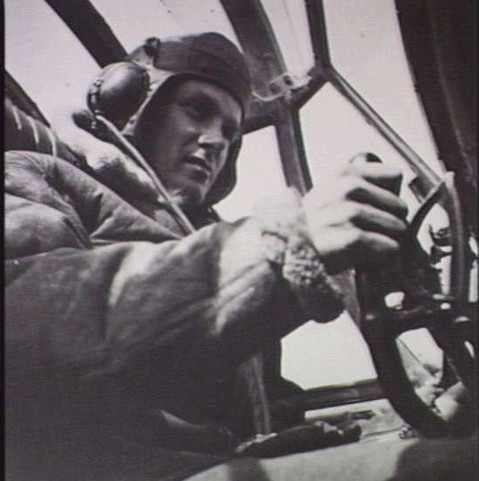
At the controls of a Wellington: the view Josef Bernat knew more
intimately than any of us — a No. 37 Squadron RAF pilot in flight, 1942.
Photo: Australian War Memorial P00809.001, public
domain, via Wikimedia Commons
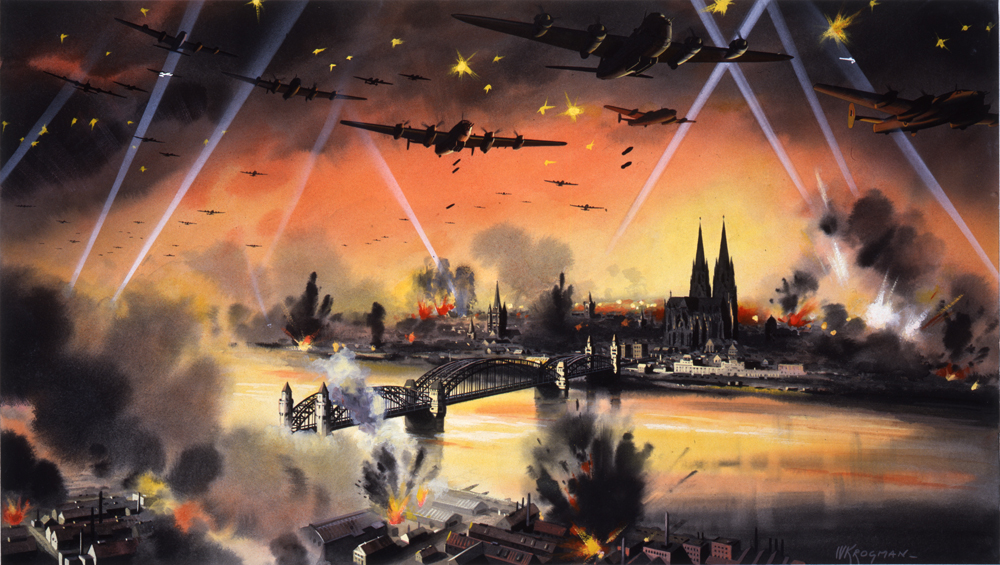
Night over Cologne through a war artist's eyes: bombers in the
searchlight cones, flak bursts and the burning city with its cathedral.
This is precisely the inferno Bernat flew through — he went to Cologne
in June 1941 and again on the Thousand Bomber Raid of May 1942.
Gouache by W. Krogman, official war art, no known
restrictions,
via Wikimedia Commons
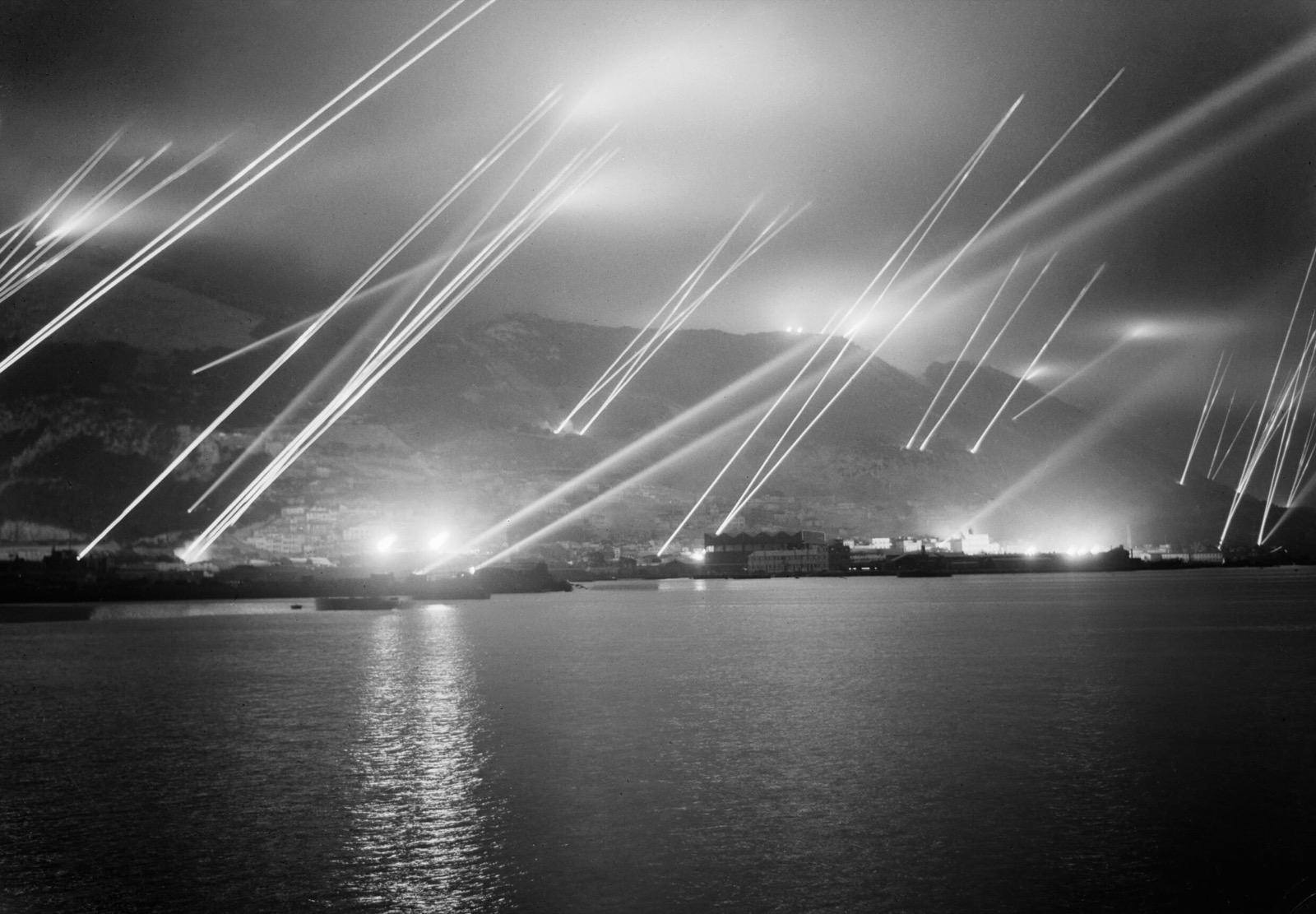
Anti-aircraft searchlight beams pierce the night sky (an air-defence
exercise, Gibraltar 1942). The same lights groped for Bernat's
Wellington on every operational night over Germany.
Photo: IWM GM 1852, public domain,
via Wikimedia Commons
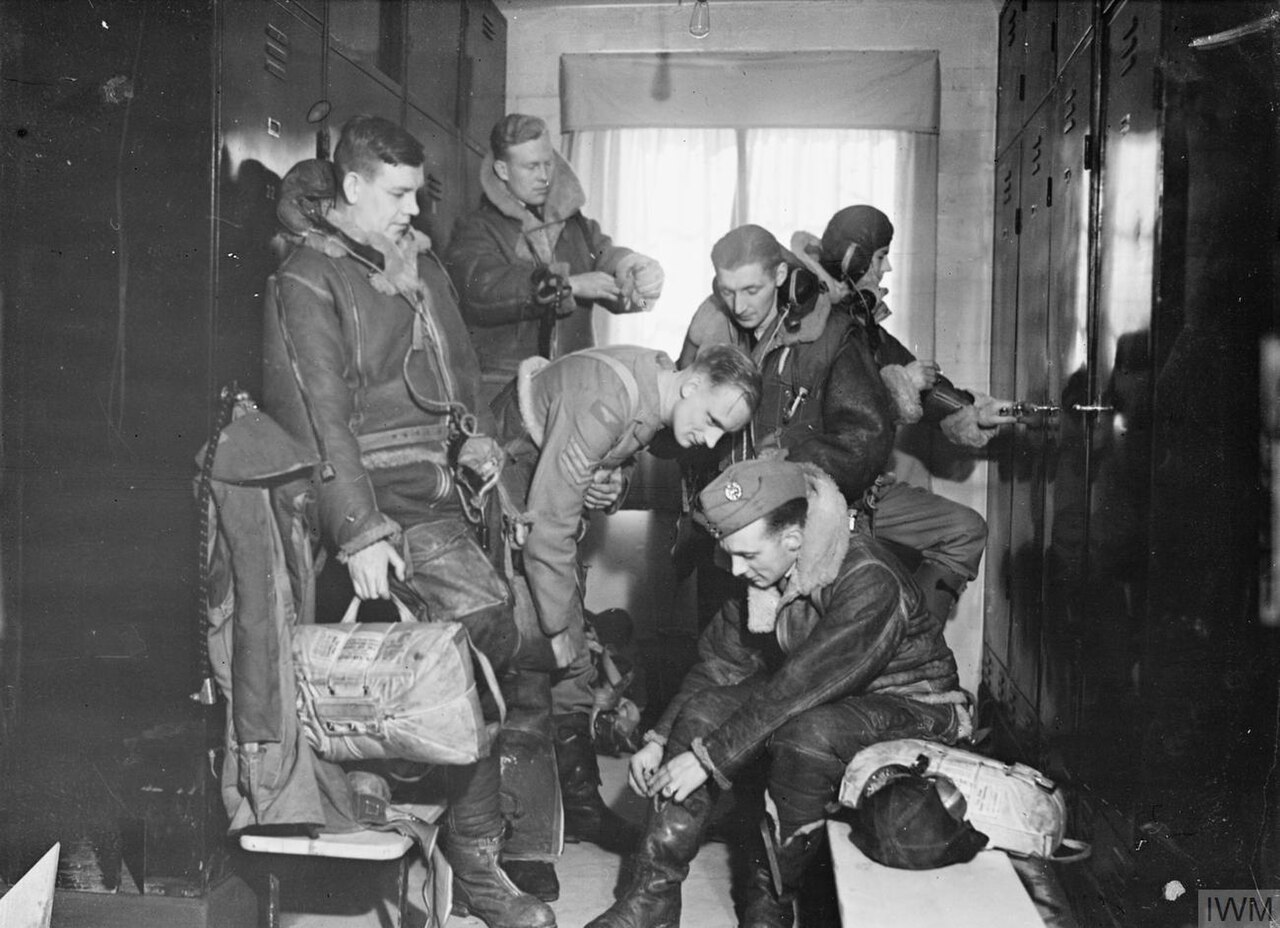
A Wellington crew put on their Irvin suits before a night raid on
Berlin (No. 99 Squadron). Bernat flew against the same target in
March 1941.
Photo: IWM CH 2505 (G. Woodbine), public domain,
via Wikimedia Commons
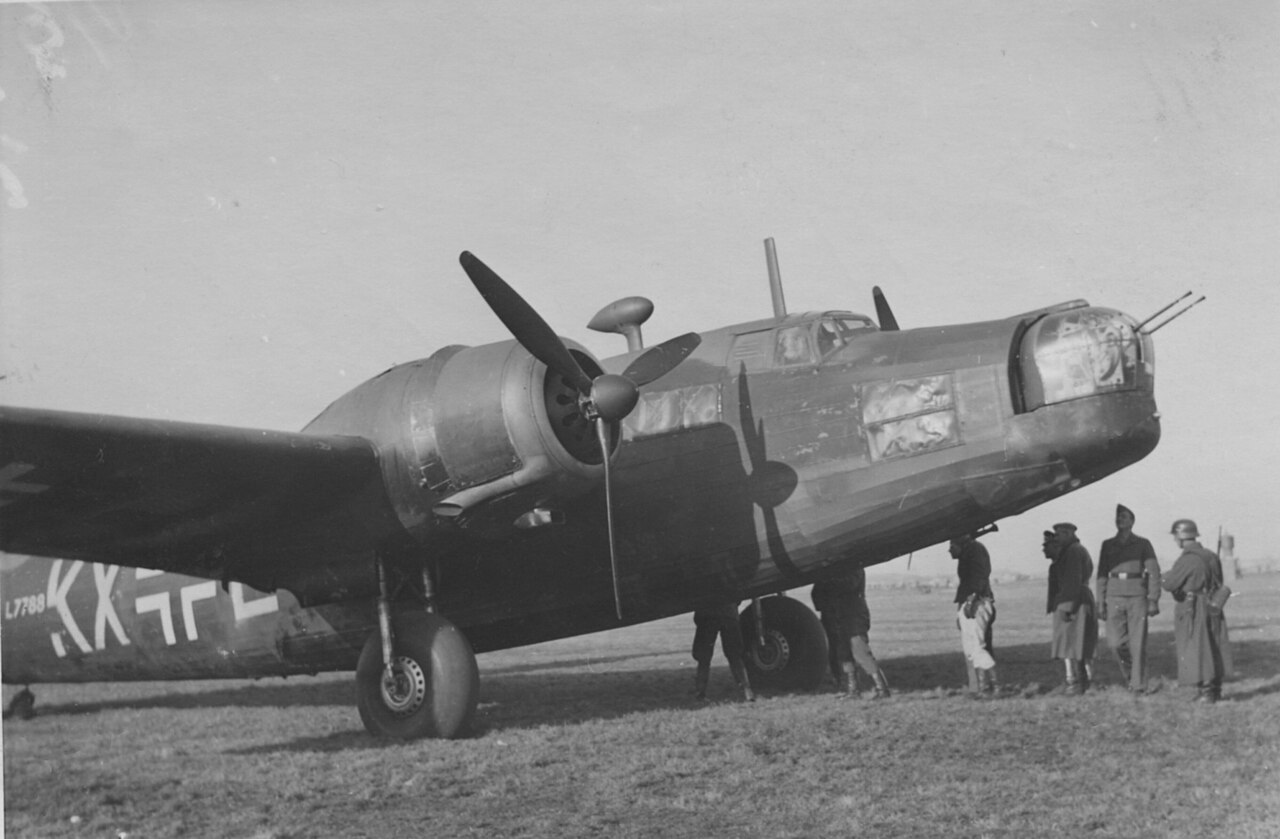
The risks of the Berlin runs: Wellington L7788 (KX-E) of 311 Squadron
after its forced landing near Leidschendam following the raid on Berlin
of 24 September 1940; the Germans later repaired it.
Photo: NIMH collection (Netherlands Institute of
Military History), CC BY-SA 4.0,
via Wikimedia Commons
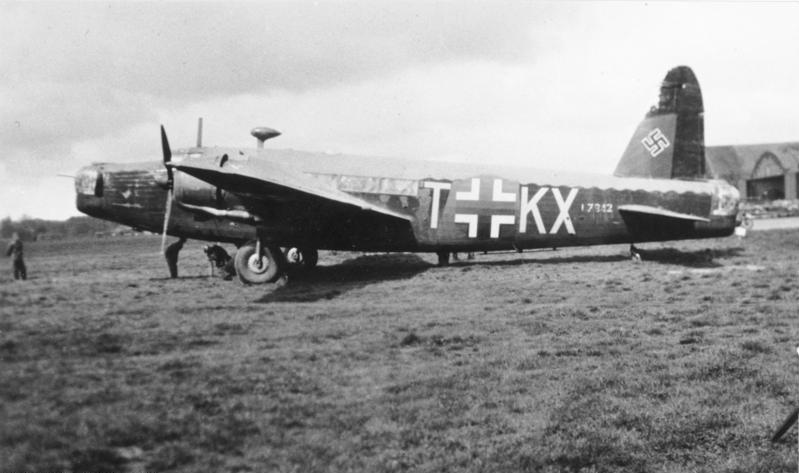
A captured Wellington Mk.Ic, L7842 of 311 Squadron, in Luftwaffe
markings (the aircraft was lost on a mission to Boulogne on
6 February 1941).
Photo: Bundesarchiv, Bild 146-1972-019-88,
CC BY-SA 3.0 DE,
via Wikimedia Commons
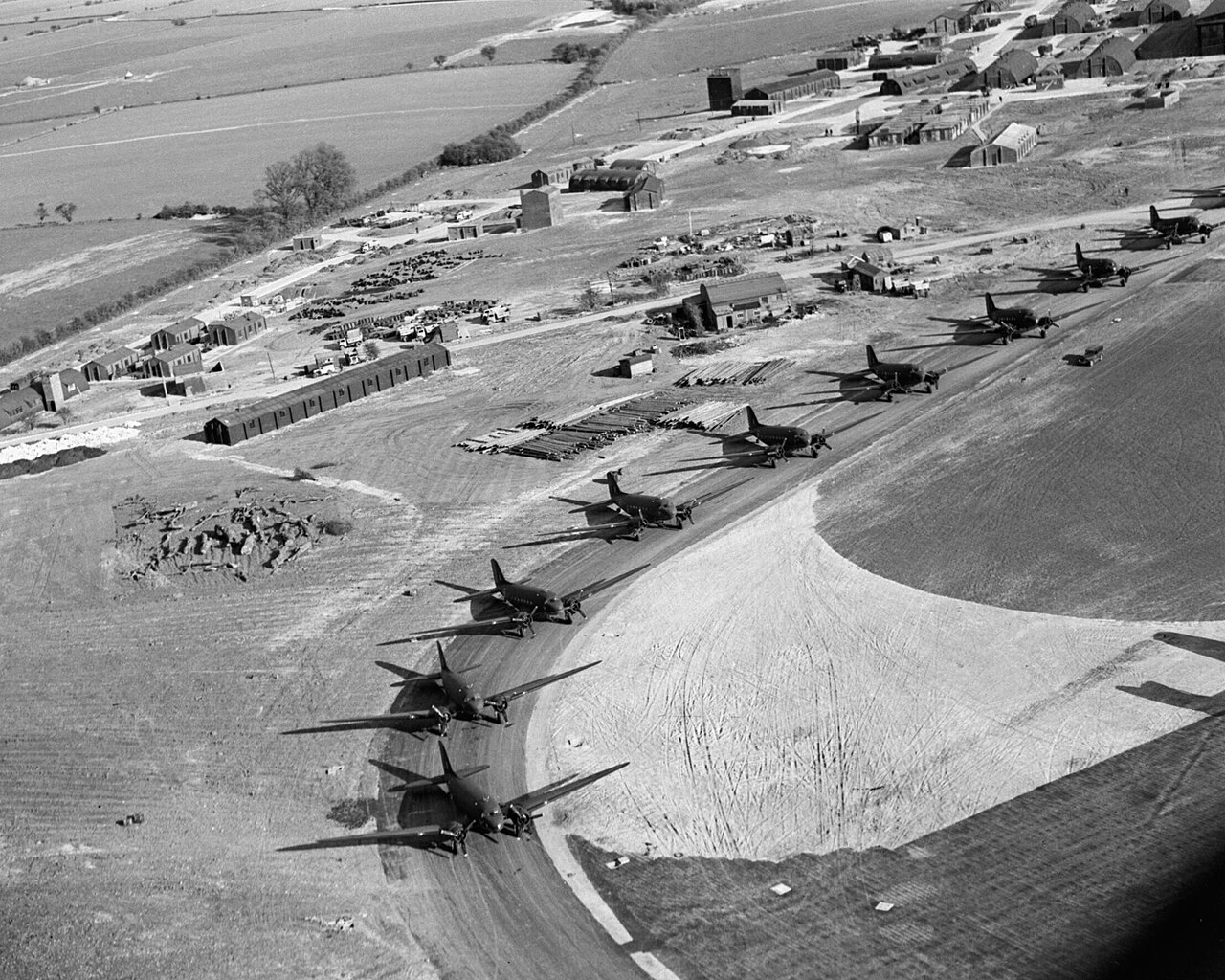
RAF Dakotas in a line (No. 233 Squadron, 1944) — the same type in
which Bernat flew out of Kbely to freedom on 14 June 1948.
Photo: IWM CH 12833, public domain,
via Wikimedia Commons
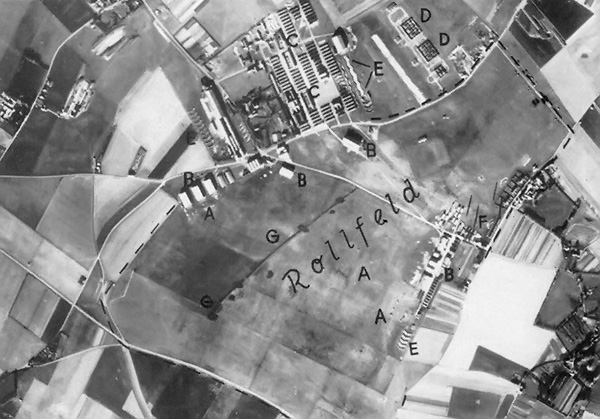
RAF Manston in Kent in a 1939 German reconnaissance photograph — here
Bernat's Dakota touched down on empty tanks on 14 June 1948.
Photo: public domain,
via Wikimedia Commons
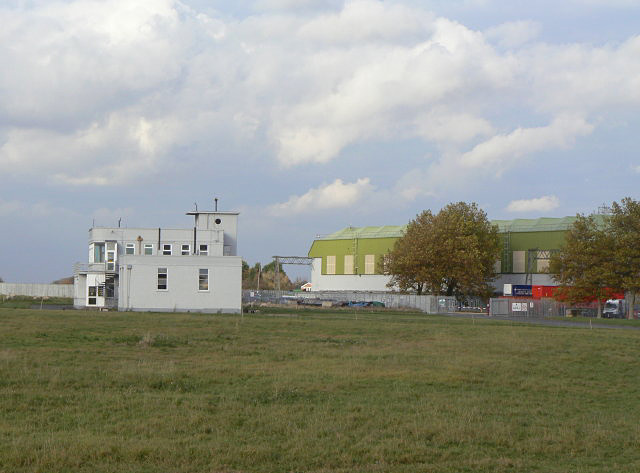
The control tower and pre-war hangars of the former RAF Newton — just
a few miles from Whatton, where Josef Bernat spent the last years of
his life.
Photo: Alan Murray-Rust, geograph.org.uk,
CC BY-SA 2.0,
via Wikimedia Commons
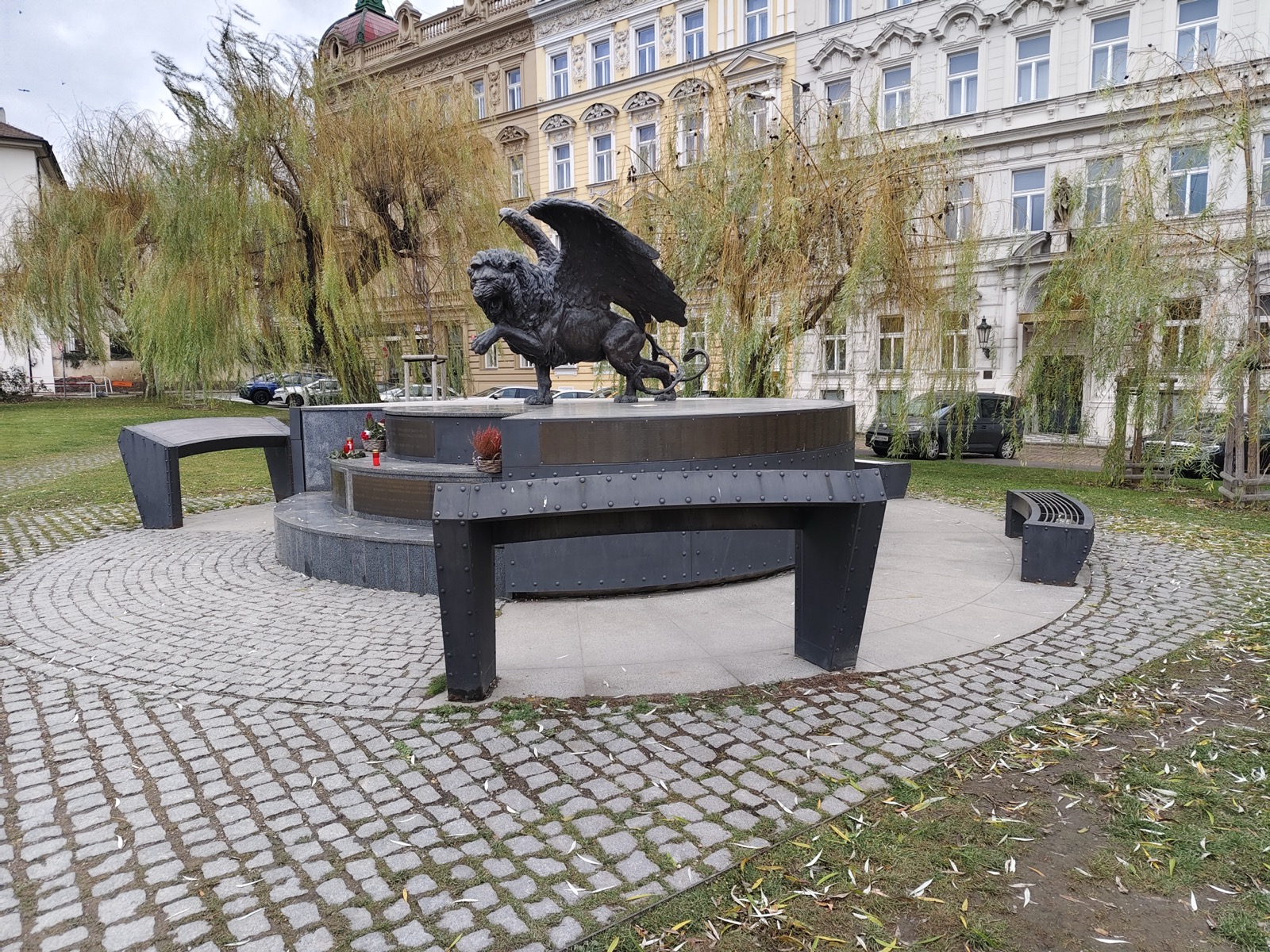
The Winged Lion Memorial at Klárov, Prague — among the 2,507 names of
Czechoslovak RAF personnel on its bronze plaques is that of Josef
Bernat.
Photo: Mojmír Churavý,
Wikimedia Commons, CC0
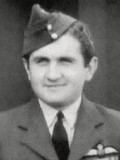
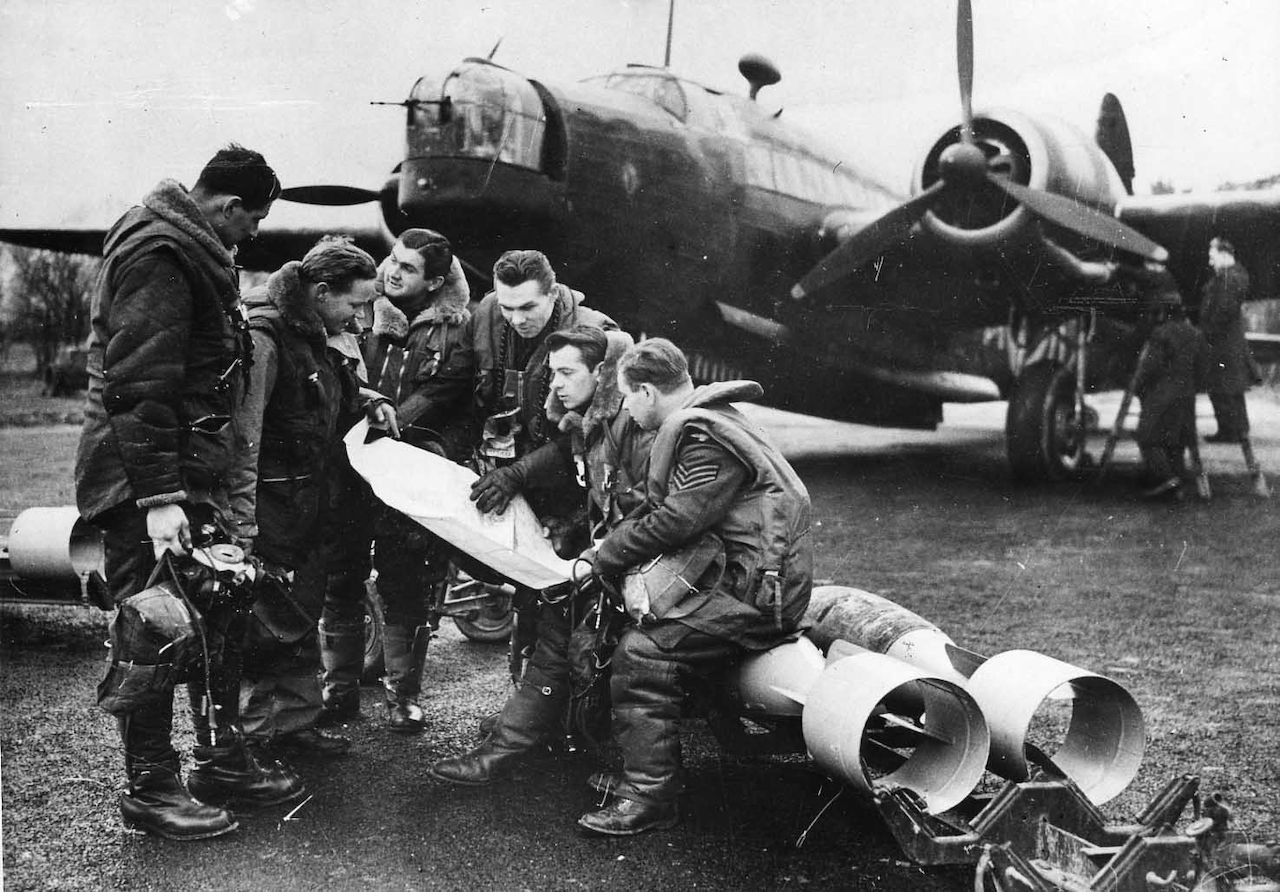
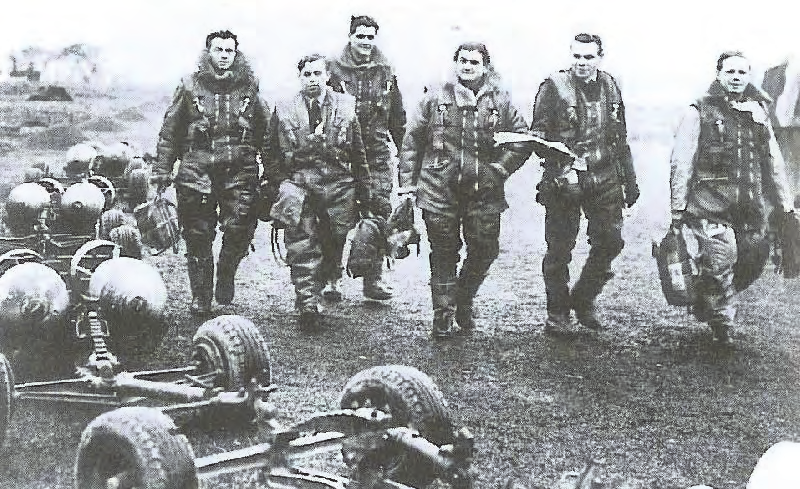
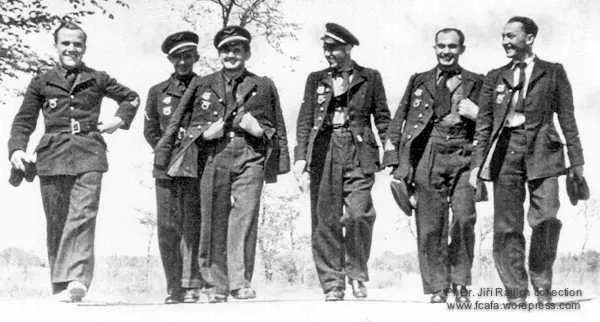
The photographs of Josef and his crews are published with
their source and owner credited; before further distribution beyond this
site, permission of the rights holders is required (VHÚ Prague, rafaci.cz,
the municipality of Hřebeč, the Tomáš Jambor archive, the Jiří Rajlich
collection). The images in “Places and machines” come from Wikimedia
Commons — they are in the public domain or under the CC licences stated in
the captions. A better-quality portrait should exist on Bernat's RAF
“aviation card” at the Military Central Archives in Prague
(VÚA–VHA). Photographs from
family archives are most welcome.



_Squadron_RAF_based_at_East_Wretham,_Norfolk,_March_1941._CH2265.jpg)